
How to Style Open Shelves Without Making Them Look Cluttered
HOW TO STYLE OPEN SHELVES FOR A COLLECTED OVER TIME LOOK WITHOUT THE CLUTTER! IF YOUR SHELVES ALWAYS END UP FEELING TOO MESSY OR TOO EMPTY, THIS IS FOR YOU.
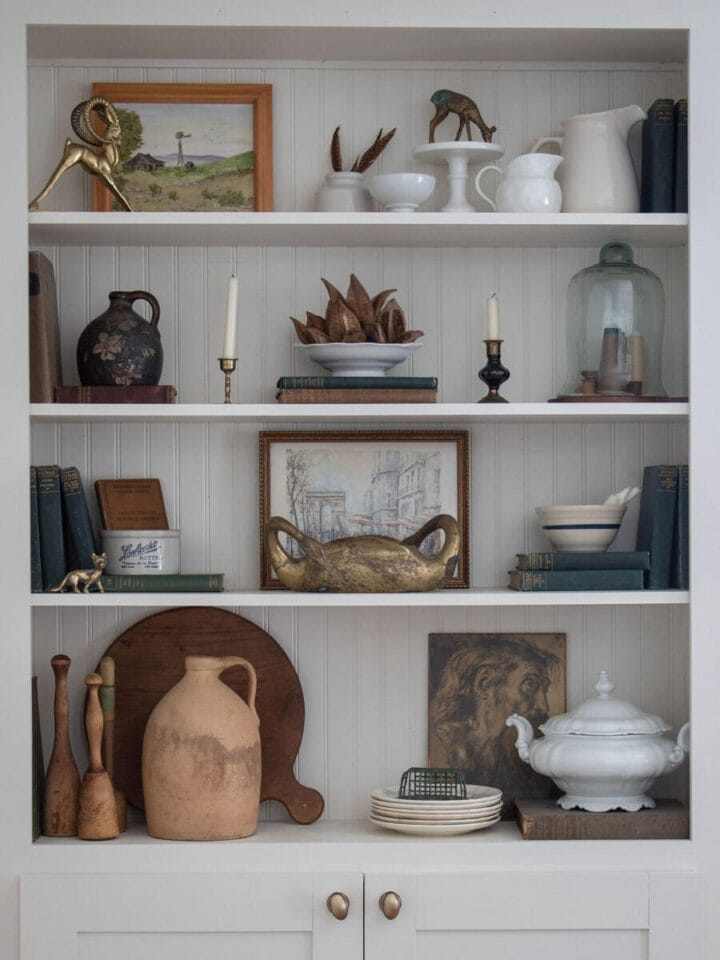
Open shelves are one of those things that look effortless until you actually go to style them.
If I’m being honest, it took me days after we moved to get our dining room shelves to look just right. I love a layered, collected look, but I didn’t want them to feel cluttered or chaotic.
Start With a Neutral Foundation
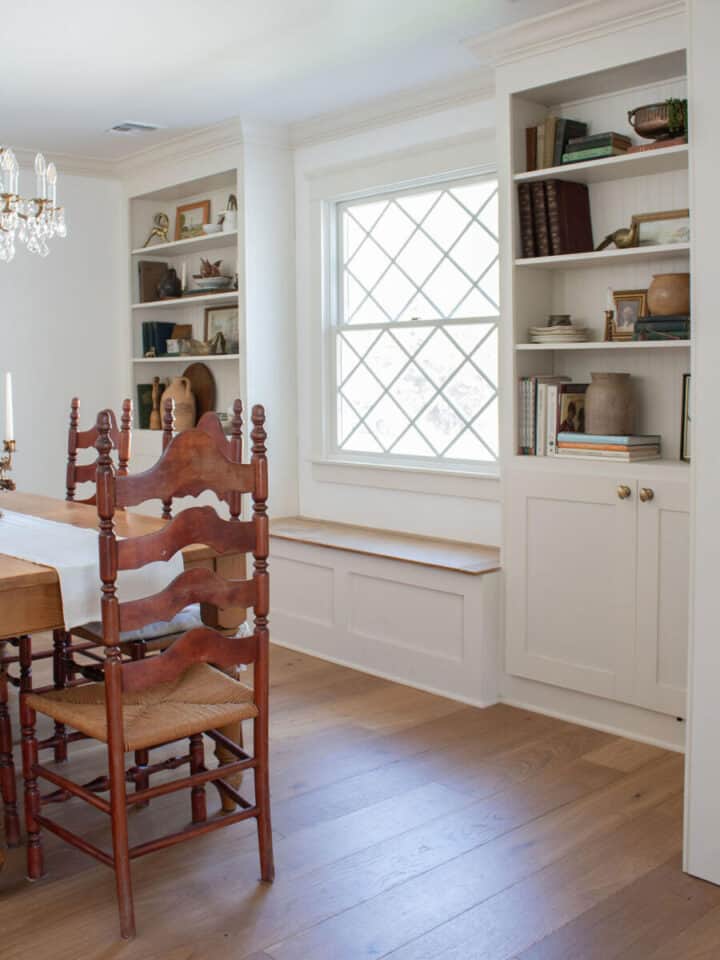
One of the biggest reasons full shelves can still feel peaceful is color. For my house, I prefer white and wood tones as the base for everything. With that neutral foundation, I can layer in the rest of the decor. This same concept extends to my built-in shelves.
When everything on your shelves is competing for attention, it can feel chaotic. But when you start with a softer, more neutral palette, everything instantly feels more cohesive—even if there’s a lot going on.
On my shelves, I lean heavily on:
- Books
- Warm wood tones
- White kitchen items
- Muted, timeworn finishes
None of it feels loud, so nothing is fighting to be the focal point.
That doesn’t mean you can’t use color, but keeping it consistent makes a huge difference.
Use Repetition to Create Calm
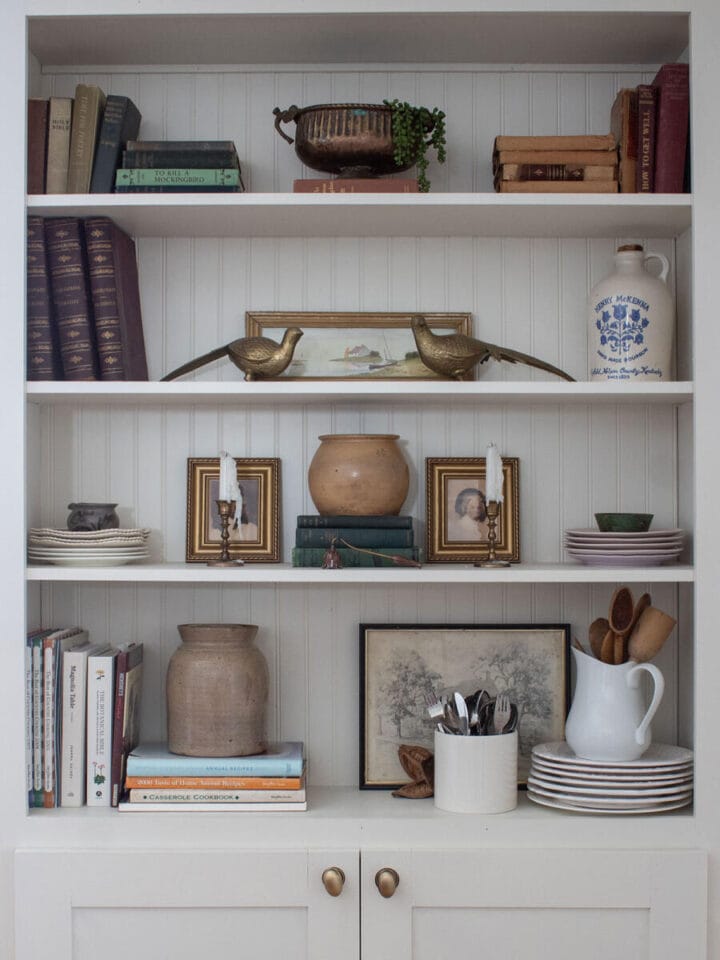
This is one of those little tricks that makes everything feel more intentional. Connecting similar items throughout allows the eye to travel.
If you look at my shelves, you’ll notice the same elements showing up again and again: books, white kitchenware, and brass pieces. Anything that didn’t fit into one of those categories is done in muted shades and tones that don’t compete. That repetition creates a sense of rhythm.
Repetition makes the eye feel like there’s a pattern, not randomness
How to Decorate Built-In Shelves With a Collected Look
The main thing with decorating any open shelving, whether built-ins, a bookcase, or even a simple wall shelf, is layering. Layering creates depth and makes everything feel more natural and lived in. If everything is lined up in a single row, it will look flat.
Vary Height and Shape (But Keep It Balanced)
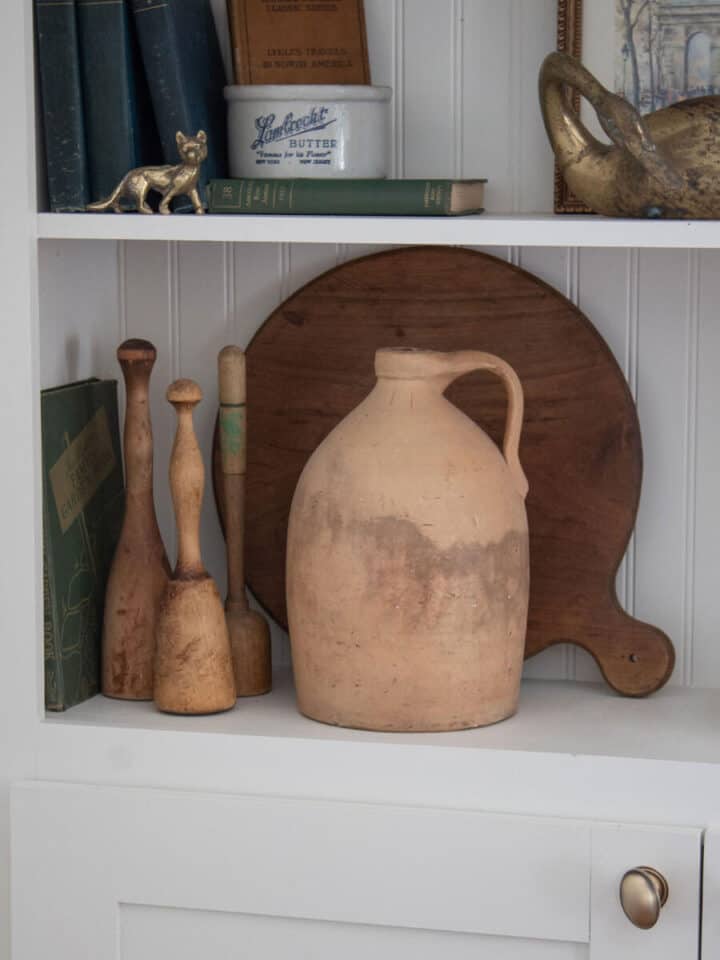
If everything is the same height, your shelves fall flat. But if everything is wildly different, it can start to feel chaotic.
The goal is somewhere in the middle.
I like to mix:
- A few taller pieces (pitchers, vases, or crocks)
- Medium-height stacks (books, bowls)
- Smaller accents layered in
You want to prevent everything in a line look and create movement, but not confusion. A little variation goes a long way. Think subtle contrast, not extreme.
Create Visual “Zones” on Each Shelf
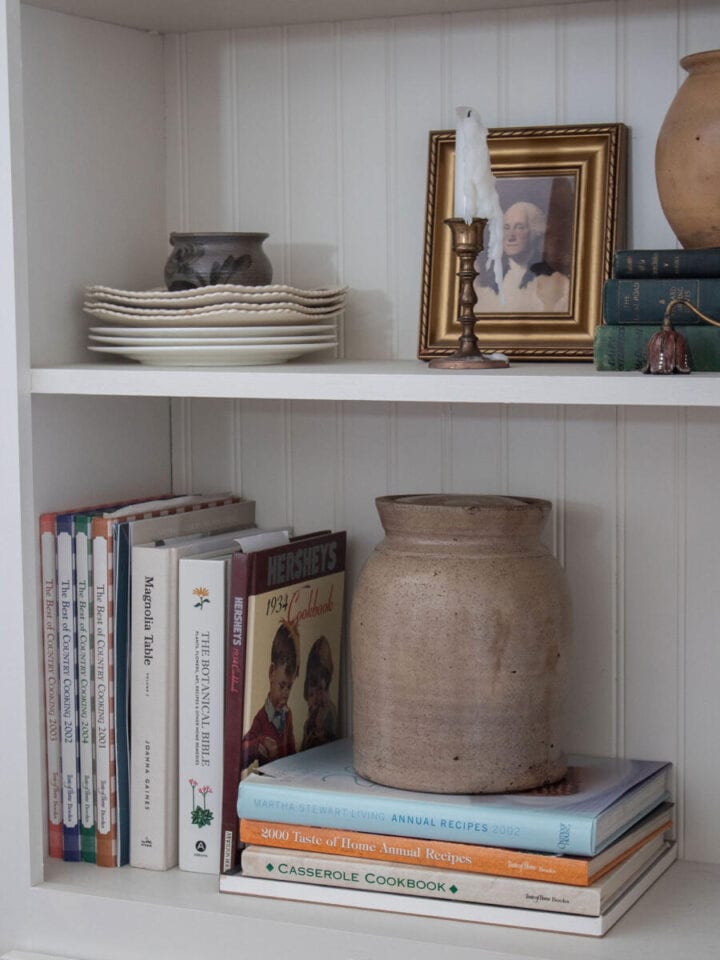
This is one of the simplest ways to keep full shelves from feeling overwhelming. Instead of thinking of each shelf as one long space to fill, break it into smaller sections: left, center, right, and treat each one like its own little vignette
It’s a small shift, but it makes a big difference in how everything feels.
That way, your eye isn’t trying to take in everything at once. It moves naturally from one grouping to the next. For these individual vignettes, I also used functional items that we often use. Some of those include cookbooks, seasonal dishes, and extra flatware.
It’s a nice mix of decorative and functional.
Even design experts emphasize that open shelving works best when you mix function with decor and avoid trying to make every inch look “perfect.”
HOW TO STYLE OPEN SHELVES: layer, don’t line everything up
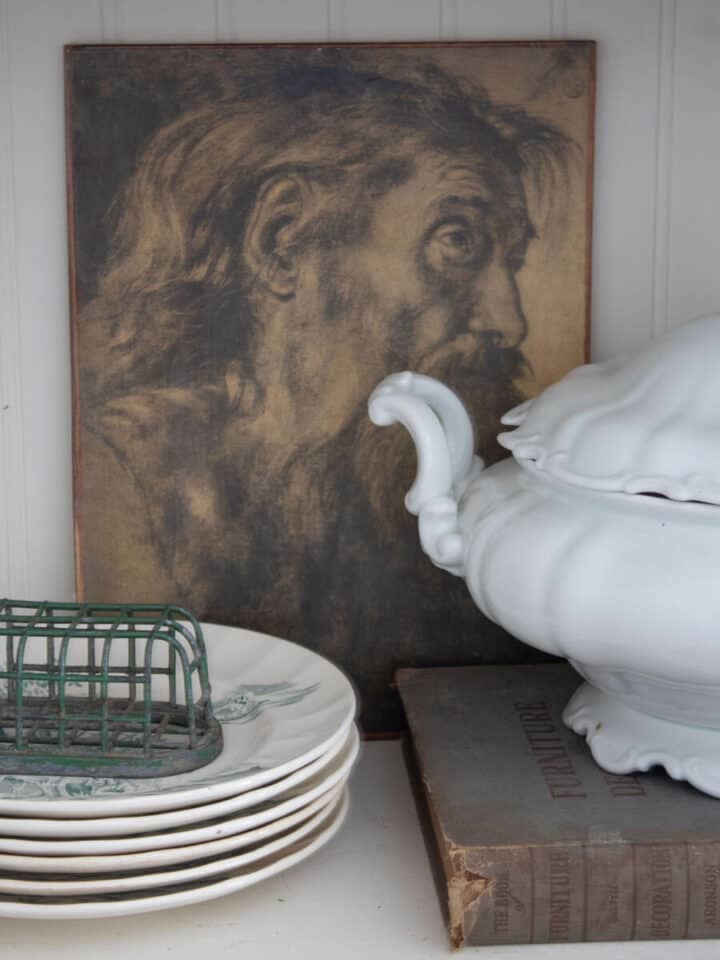
Layering items of different heights isn’t the only way to get a collected look. You also want to layer in depth from front to back.
If everything is sitting in a straight row, your shelves will feel more like storage than styling.
Try:
- Leaning a cutting board or artwork against the back
- Stacking books and placing objects on top
- Letting smaller pieces sit slightly in front of larger ones
That depth is what makes shelves feel interesting instead of cluttered.
Leave a Little Breathing Room
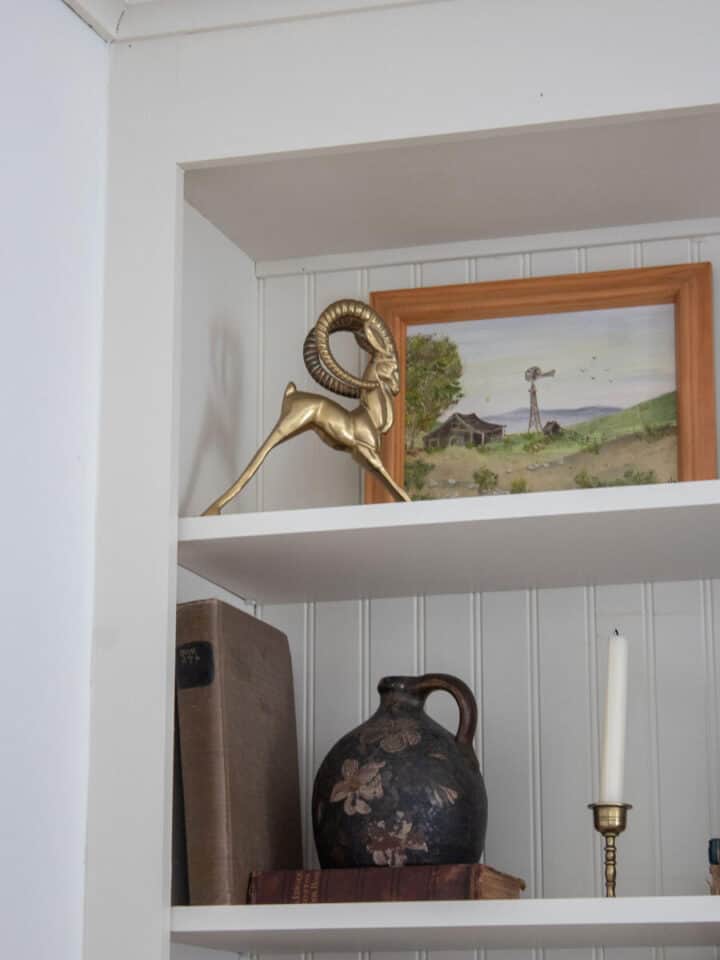
This might sound surprising coming from someone who clearly loves lots of decor, but not every inch needs to be filled.
Those small pockets of empty space are what allow everything else to stand out. Without them, even the prettiest pieces can start to blur together.
So if something feels off, it’s often not that you need to add more… it’s that you need to take a little away.
Edit More Than You Think You Need To
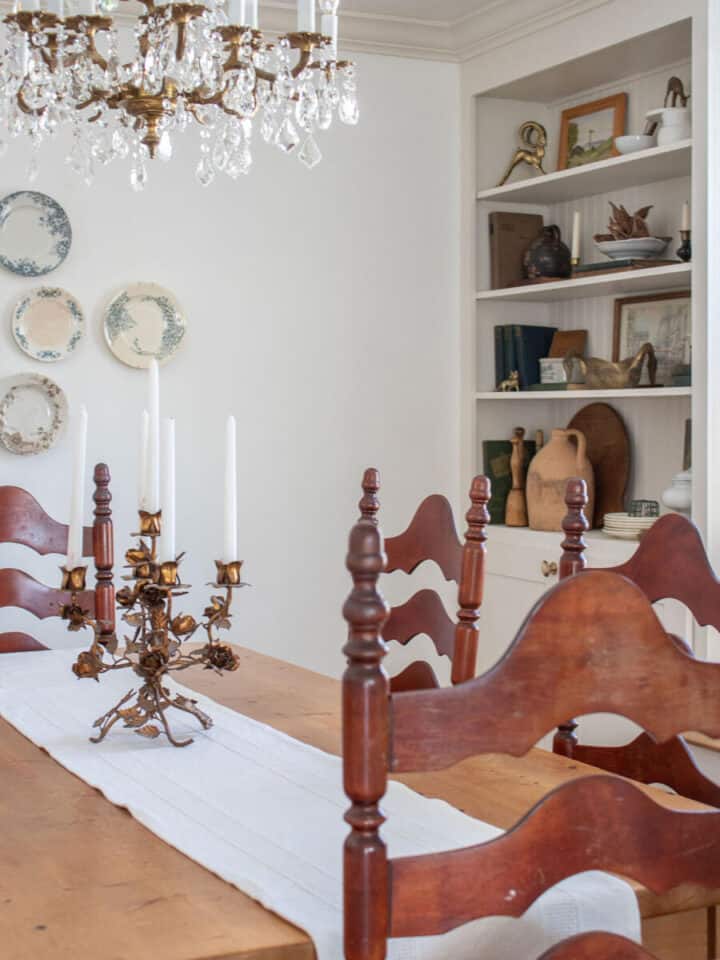
Styling shelves isn’t just about what you put on them—it’s about what you choose to leave off.
If everything feels special, nothing stands out.
When I style my shelves, I usually start with more than I need… and then slowly remove pieces until it feels right. It’s a bit of a process, but it’s always worth it.
Editing your decor is just as important as adding to it when creating a calm, styled space.
Stick to a Loose Color Story
Tie everything together.
Even with a mix of vintage pieces, having a general color direction helps everything feel pulled together.
For me, that usually looks like:
- soft whites
- warm woods
- a few muted, earthy tones
It doesn’t have to be exact or overly planned, just cohesive enough that nothing feels out of place.
Add a Touch of Life (But Keep It Simple)
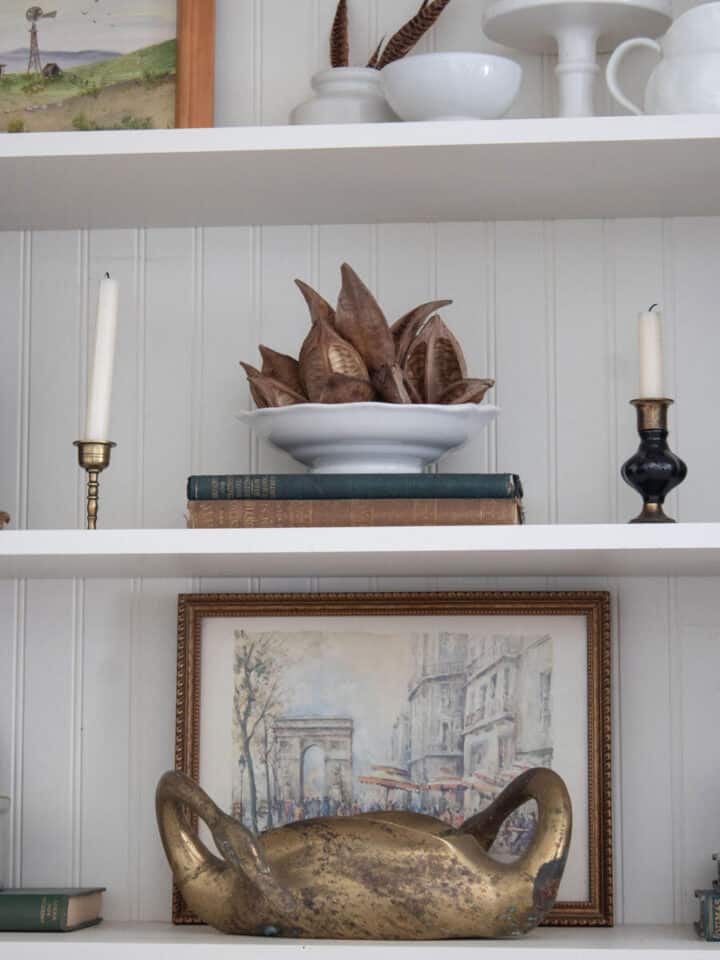
A little bit of greenery or something organic can soften everything beautifully.
A small plant, a few stems, or even something seasonal adds that final layer that makes a space feel lived in.
With the placement of our shelves, they don’t get any sunlight, so using any real plants wasn’t an option. Rather than using faux greenery, I went with a bit of organic elements, like these large sora pods in a bowl. If you want a natural look without using faux, these are a great option, as are dried flowers.
Of course, in our home, I also like to mix in vintage home decor to add character. Vintage pieces really come to life when you mix them with natural elements. It’s an effortless combination that works every time.
The key is to keep it simple. Too much, and it starts to tip back into clutter.
Mixing vintage pieces into your home adds depth and character, and it can also be a budget-friendly way to decorate when you find them at thrift stores or flea markets.
Step Back and Adjust
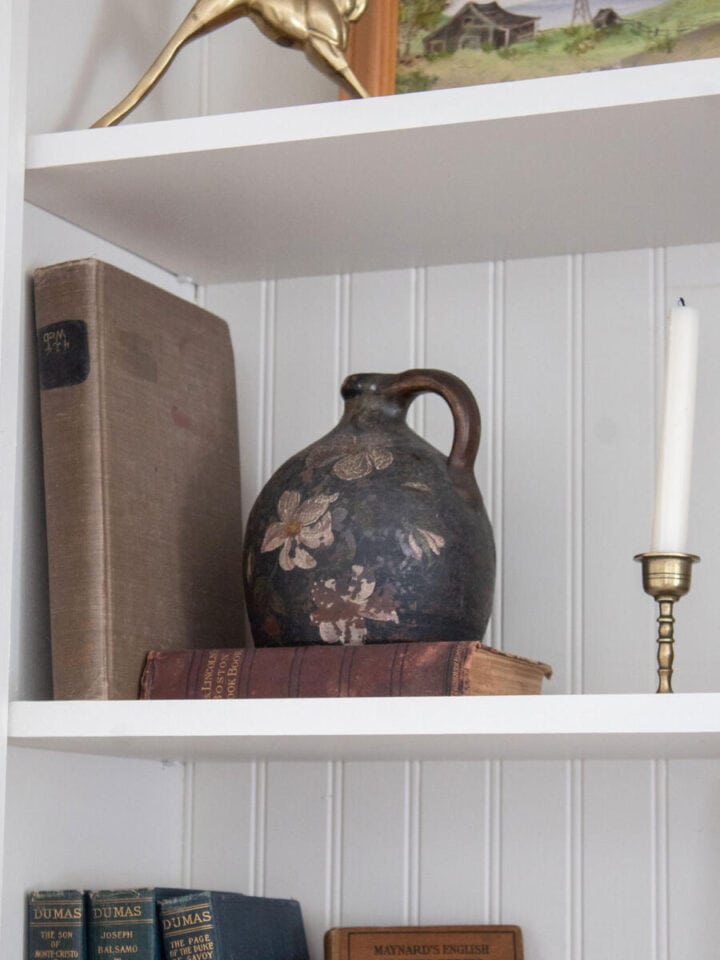
This part takes a little time. If something looks off, walk away and come back later. Sometimes after doing that, it will jump out at you. You could also take a photo of the shelves; often it’s easier to spot that way.
Taking a break and looking at them later with a fresh set of eyes can make all the difference.
And don’t be afraid to move things around. The best shelves usually come together over time, not all at once. For our shelves, I had to pull things from all over the house to get them right.
A Collected Look, Without the Clutter
Shelves don’t need to be minimal to feel beautiful; a collected home tells a story, and that can’t be rushed. Take your time and use pieces that feel meaningful to you.
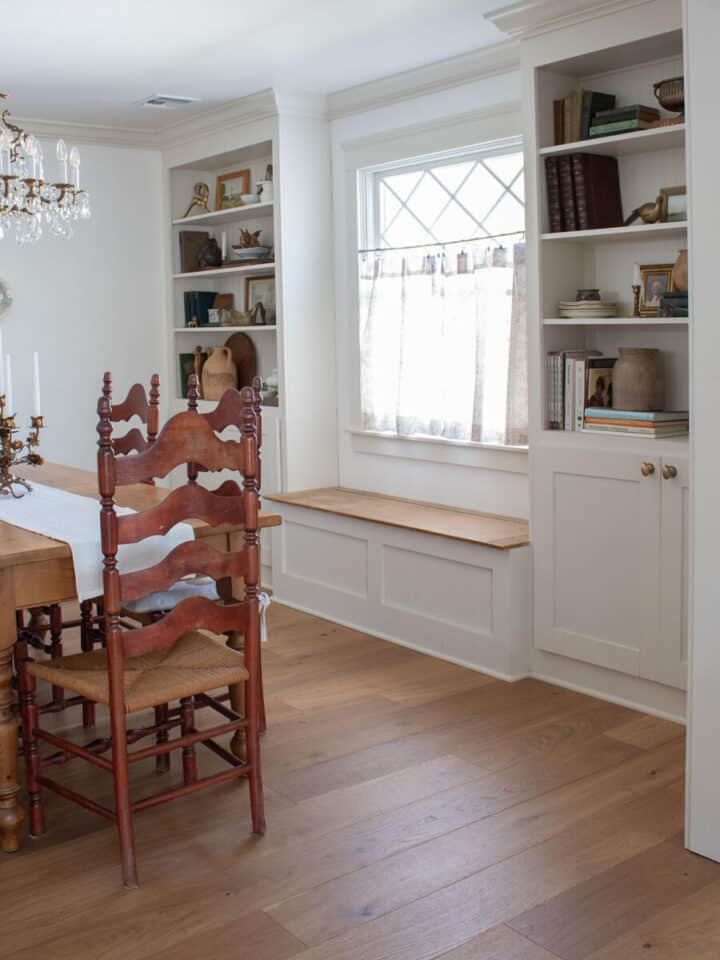
Some of the most inviting spaces are the ones that feel layered, personal, and a little bit collected over time.
A collected look works because it mimics how things naturally exist in real life. Nothing in the real world sits perfectly lined up. When you bring that same idea to shelves, everything instantly feels more relaxed and less staged.
Take the pressure off perfection. Slide things around, overlap, tuck, adjust.
And have fun with it!
Many of these same styling principles also work on side tables. If you’re decorating your living room, don’t miss these end table decorating ideas.
If you liked this post on how to style open shelves without clutter, you may also enjoy these decorating posts:


Good advice! Thanks
Thank you!